
Northside Independent School District (ISD) in San Antonio, Texas, earned the Consortium for School Networking (CoSN) Trusted Learning Environment Seal for its student data privacy practices. It’s the 12th school system in Texas to receive the national recognition.

Houston Christian University (HCU) launched a Master of Science program in computer and information sciences with two options: 100% online and low-residency, which combines online coursework with an on-campus weekend residency for each course.

Federal respondents reported more mature AI governance than their state and local counterparts, but both groups pointed to security, workforce, and infrastructure challenges as adoption expands.
The Massachusetts Institute of Technology (MIT) is calling for changes to its teaching, student assessment, and research as generative artificial intelligence (AI) becomes more integrated into academic work.

As more communities consider data center development, state and local leaders need to bring residents into the process earlier and give them better information about projects’ energy, land-use, environmental, and economic impacts, panelists said during a recent Brookings Institution discussion.

California Gov. Gavin Newsom issued an executive order on Sept. 18 that accelerates implementation of the state’s new artificial intelligence (AI) audit laws and directs officials to study additional safeguards for large frontier AI developers, including a potential requirement for an emergency kill switch.
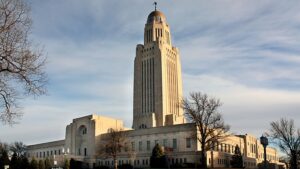
The Nebraska Secretary of State’s office launched a new online voter registration system that consolidates voter registration and information services into a single platform ahead of the Nov. 3 general election.

The American Federation of Teachers (AFT), United Federation of Teachers (UFT), and Microsoft announced on Sept. 9 a national standard designed to give U.S. school districts enforceable artificial intelligence (AI) safety and data privacy protections for students, families, and educators.

Salesforce announced $27 million in new education grants on Sept. 14, including $18 million for public school districts in five cities to support student career readiness, teacher development, and artificial intelligence (AI) education.

The University of North Texas (UNT) received a $20 million gift to expand its artificial intelligence (AI) and advanced analytics programs, including student scholarships, research, faculty support, and emerging technology initiatives, the university announced Sept. 8.