
The Consortium for School Networking (CoSN) released a new case study on Oct. 6 that details how Illinois is using CoSN’s Trusted Learning Environment (TLE) State Partnership Program to accelerate district progress on student data privacy and security.
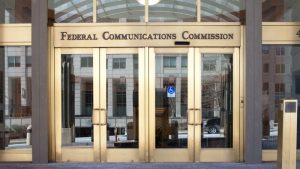
The Federal Communications Commission (FCC) has okayed a request from 23 state attorneys general to allow state correctional facilities to use cellphone jamming technology.

New York State is making $13.9 million in federal grant funding available to help local governments improve their cybersecurity infrastructure – but instead of issuing checks, the state will procure the cybersecurity tools directly.

While 57% of school districts report using AI in their network environments, most are still in the early stages of implementation for their back-end systems, according to a new survey from the Consortium for School Networking (CoSN).

The mayor of St. Louis, Mo., has signed an executive order to develop a framework for developing artificial intelligence data centers after previously considering a temporary ban on the development of those centers.

As the Senate reexamines the Universal Service Fund (USF), education technology leaders are urging lawmakers to protect and modernize the E-Rate program, which they say has connected nearly every U.S. public school to the internet but now faces mounting cybersecurity and funding challenges.

Legislation has been passed by the California State Assembly that requires chatbot operators to implement safeguards around conversations with bots and to give families the right to pursue legal action against developers who don’t provide those guardrails.

The University of Southern California (USC) Rossier School of Education announced that it is now accepting applications for the 8th cohort of its Education Technology (EdTech) Accelerator program.

Lancaster, Calif., a city in northern Los Angeles County, has partnered with the AI company Labrynth to deploy its AI-powered permitting platform to accelerate permitting approvals.

New York City Public Schools (NYCPS) said it passed a significant milestone last week after more than 10 million books had been borrowed and 5 million reading hours had been logged by students since the launch of its Citywide Digital Library (CDL) five years ago.
Archives
- June 2025 (1)
- December 2024 (1)
- November 2024 (1)
- October 2024 (1)
- September 2024 (1)
- August 2024 (1)
- July 2024 (1)
- June 2024 (1)
- May 2024 (1)
- April 2024 (1)
- March 2024 (1)
- February 2024 (1)
- January 2024 (1)
- December 2023 (1)
- November 2023 (1)
- October 2023 (1)
- September 2023 (1)
- August 2023 (1)
- July 2023 (1)
- June 2023 (1)
- May 2023 (1)
- April 2023 (1)
- March 2023 (1)
- February 2023 (1)
- January 2023 (1)
- December 2021 (1)
- October 2021 (1)
- June 2021 (1)
- May 2021 (2)
- April 2021 (2)
- March 2021 (4)
- February 2021 (1)
- February 2020 (1)
- October 2019 (2)
- September 2019 (3)
- August 2019 (1)
- July 2019 (2)
- December 2018 (1)
- February 2018 (1)
- September 2017 (3)
- November 2016 (2)
- October 2016 (3)
- September 2016 (1)
- April 2016 (1)